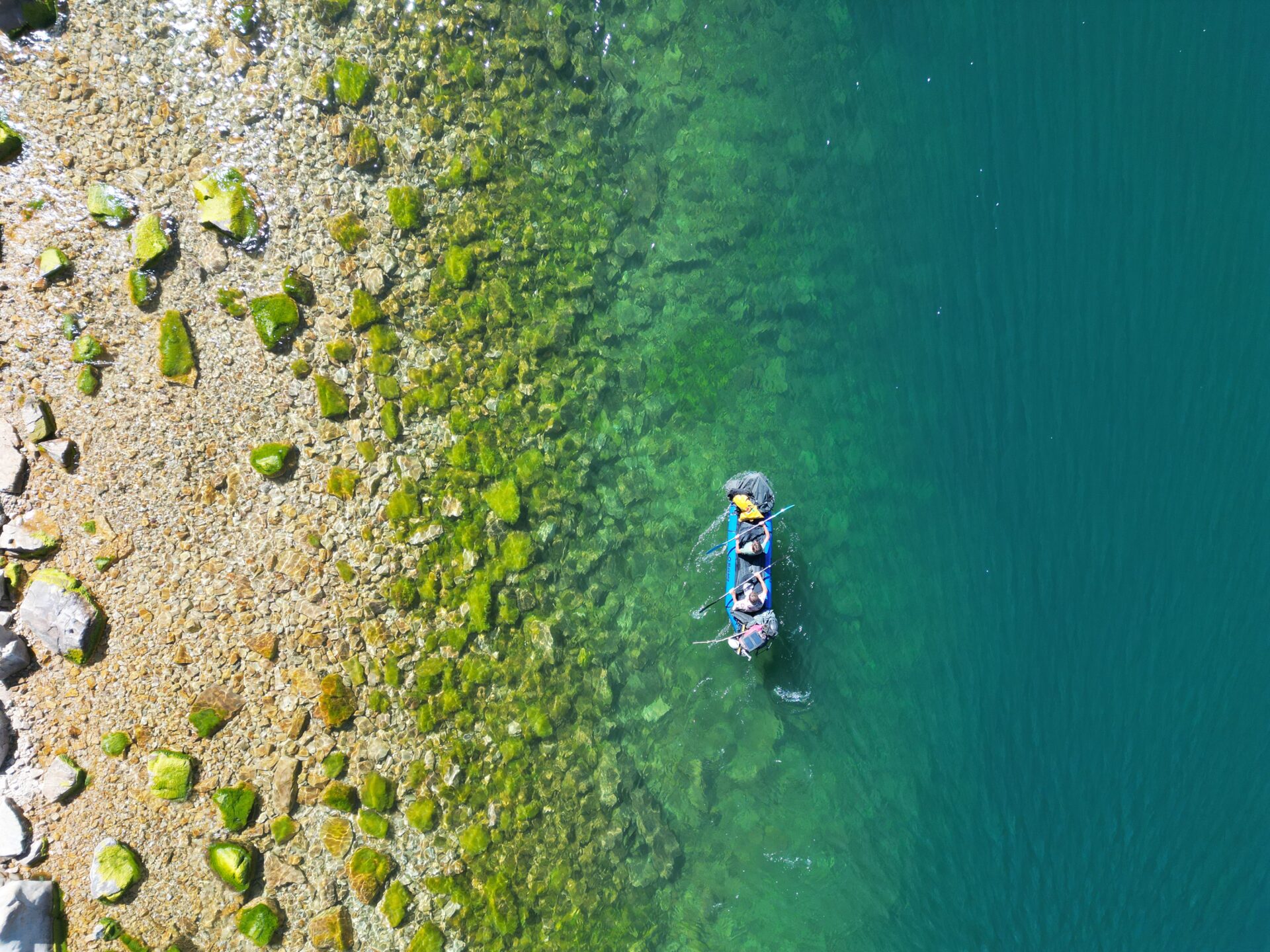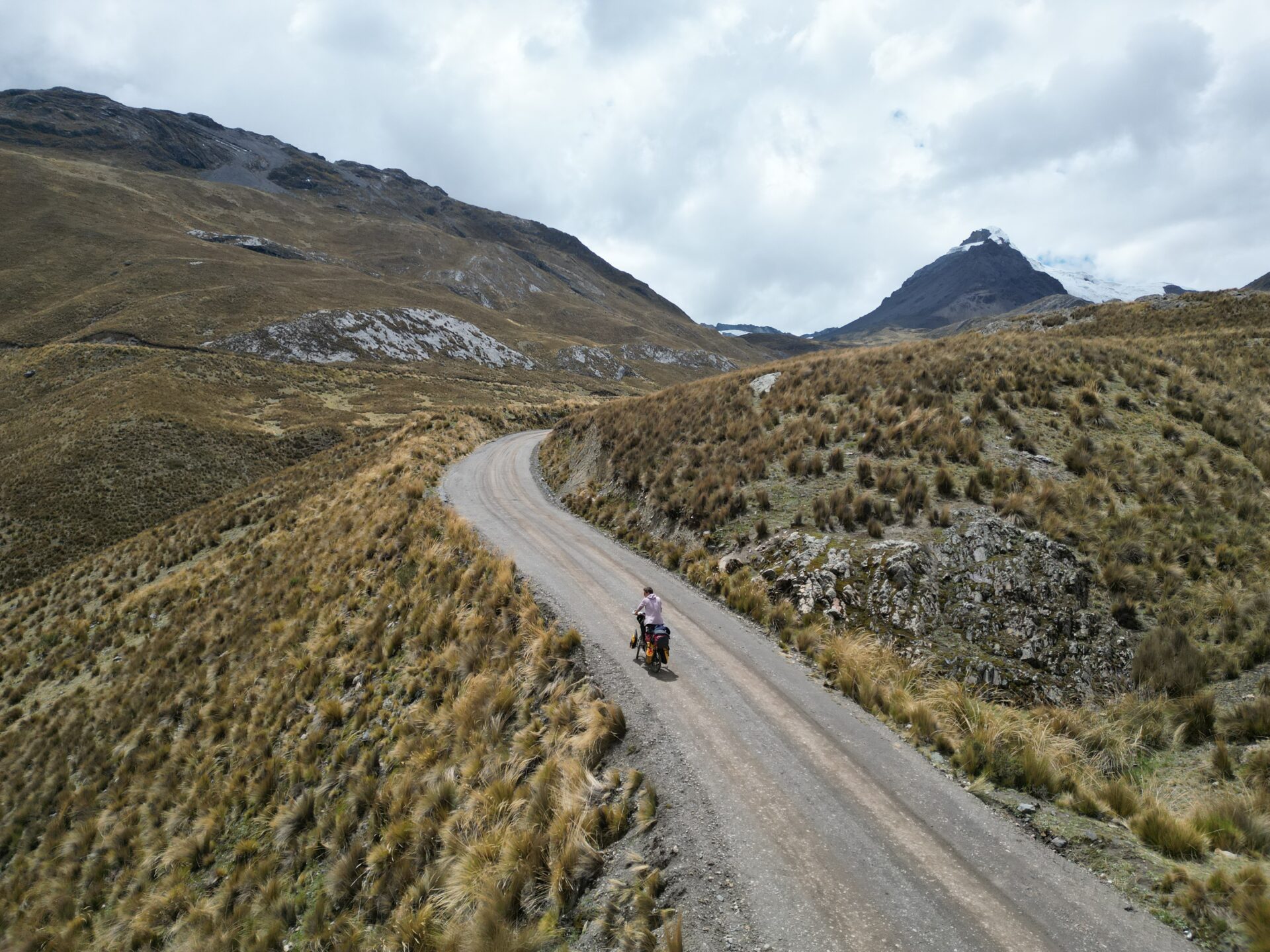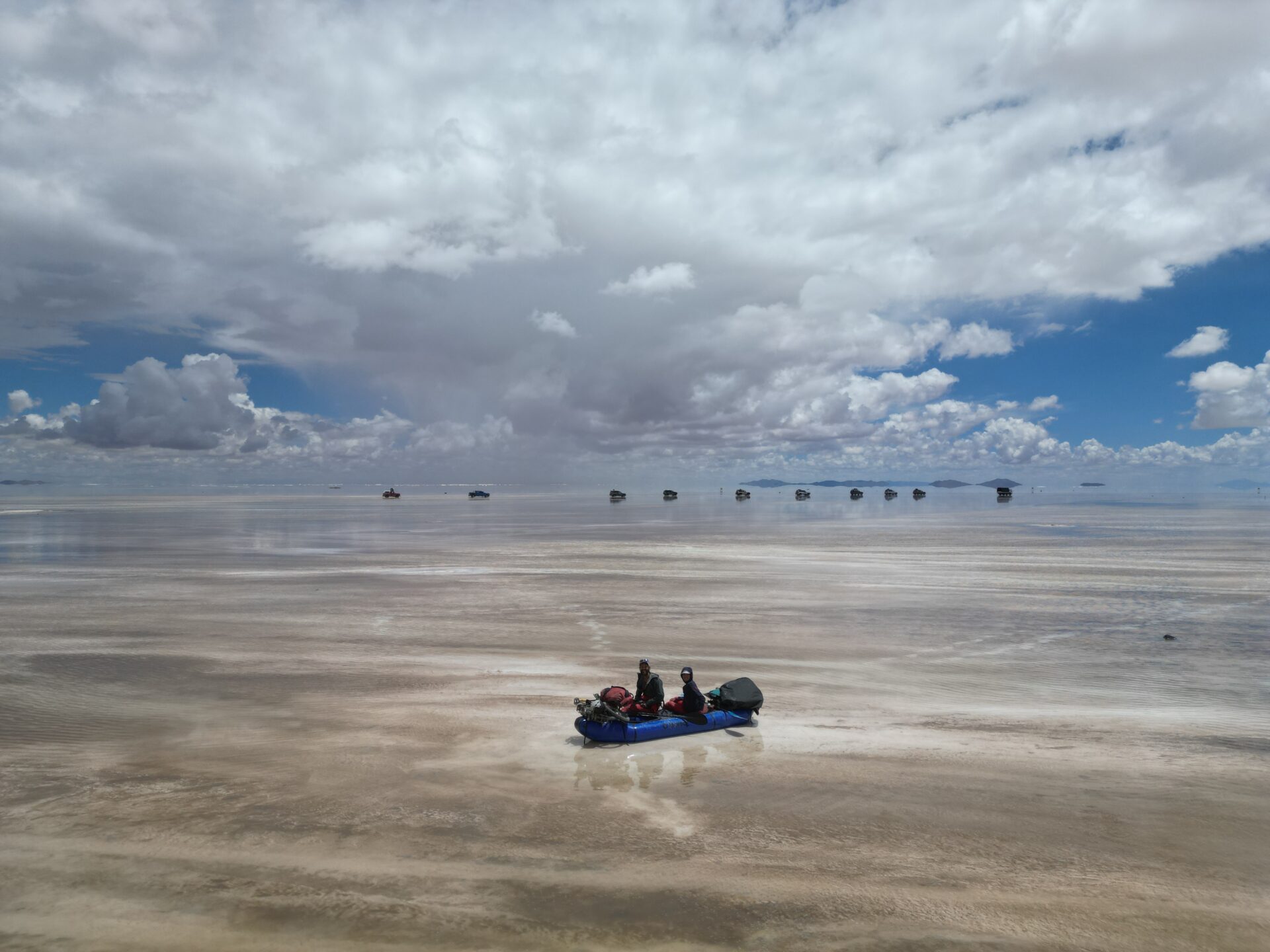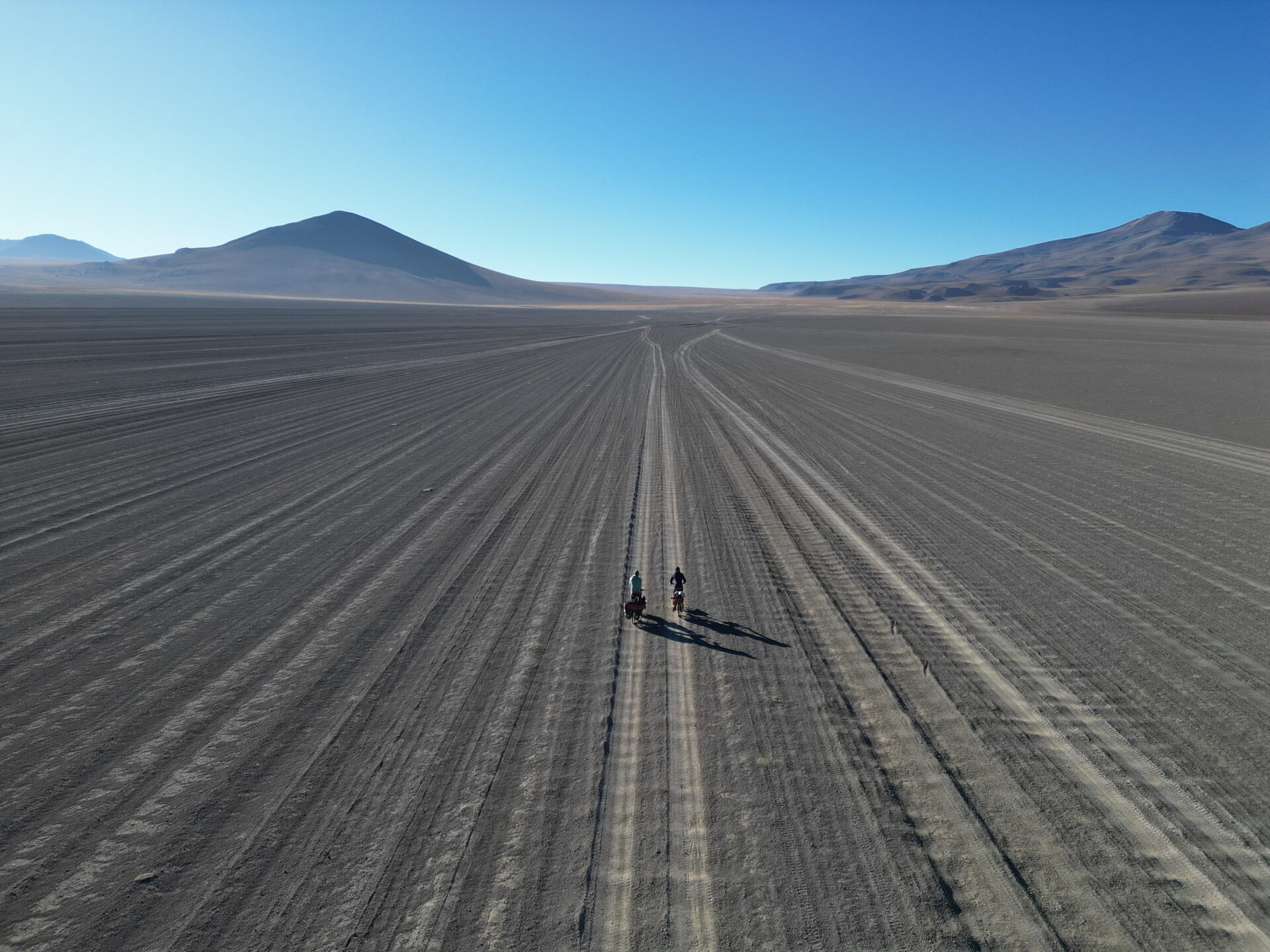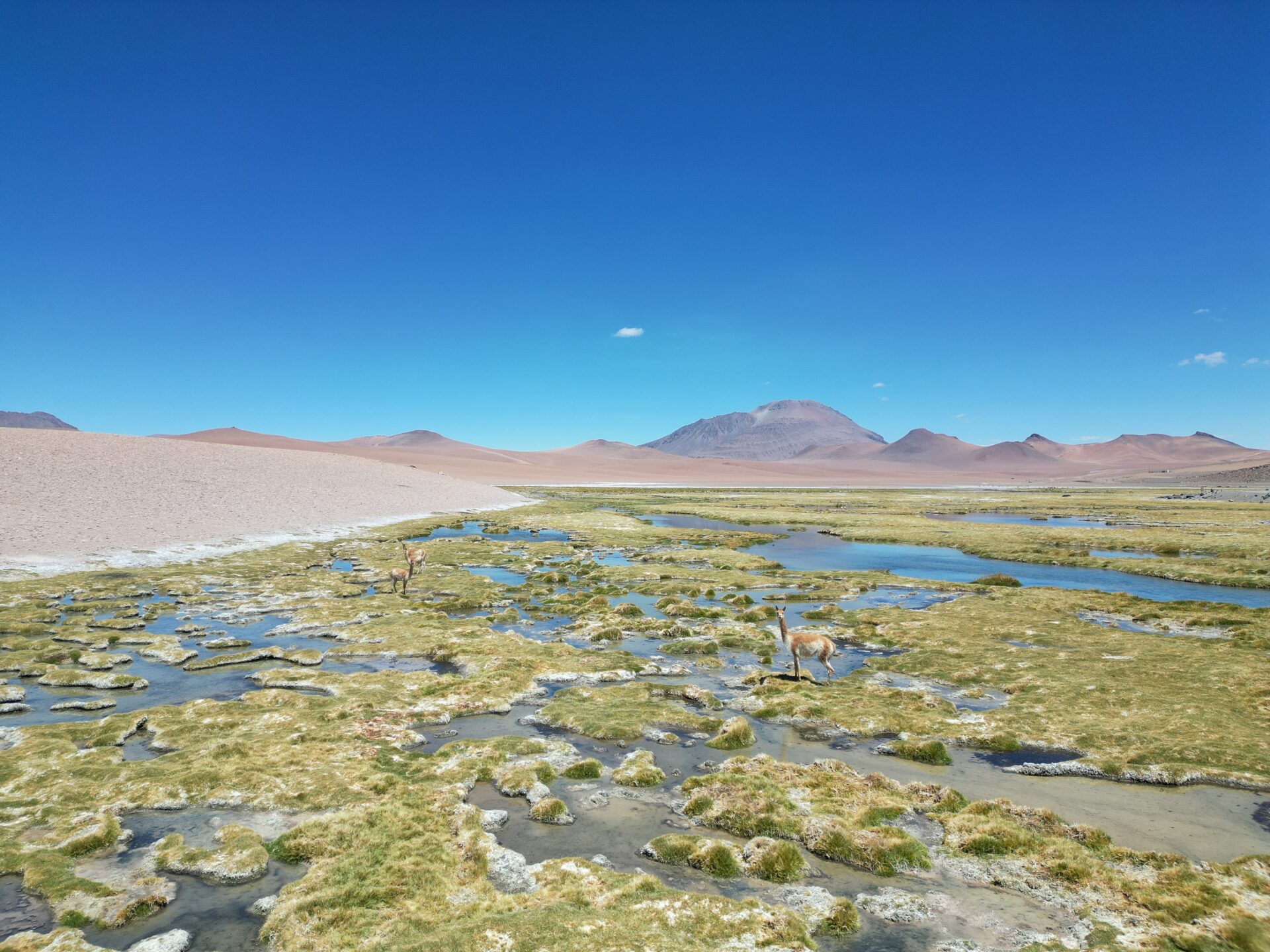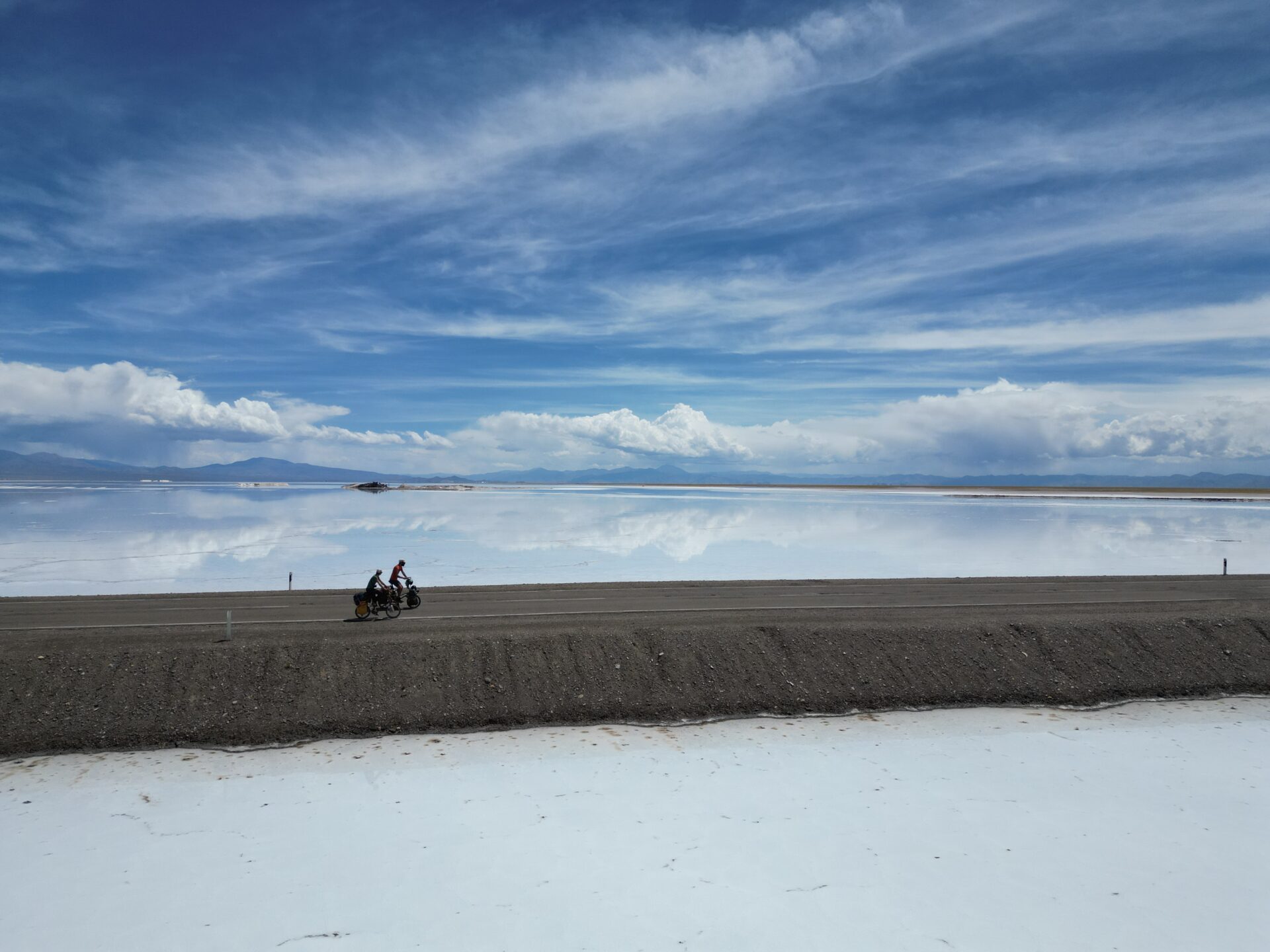
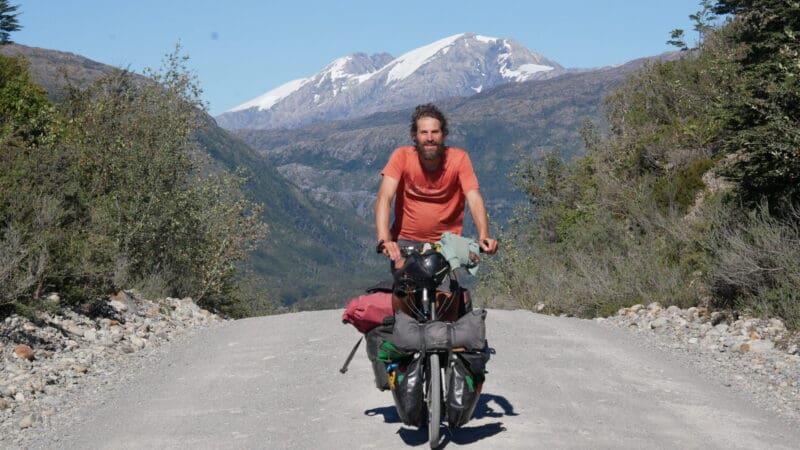
Olivier Chambault and his partner Capucine just spent six months bikerafting across South America on their Diamond Llamas, from the jungles of Ecuador to El Chaltén at the edge of Patagonia. Olivier is the founder of Mekong Packraft, and he built the packraft they paddled himself.
They paddled the Río Grande from its source, crossed Lake Titicaca by packraft, and climbed 4,800-metre passes in the Cordillera Blanca. “Faced with so much beauty, our eyes fill with tears,” Olivier writes. On the Carretera Austral, “a condor glides overhead… just a few meters away. Incredible!”
Here is the story in his words and there is a picture gallery from his full 6 month expedition at the end of the blog.
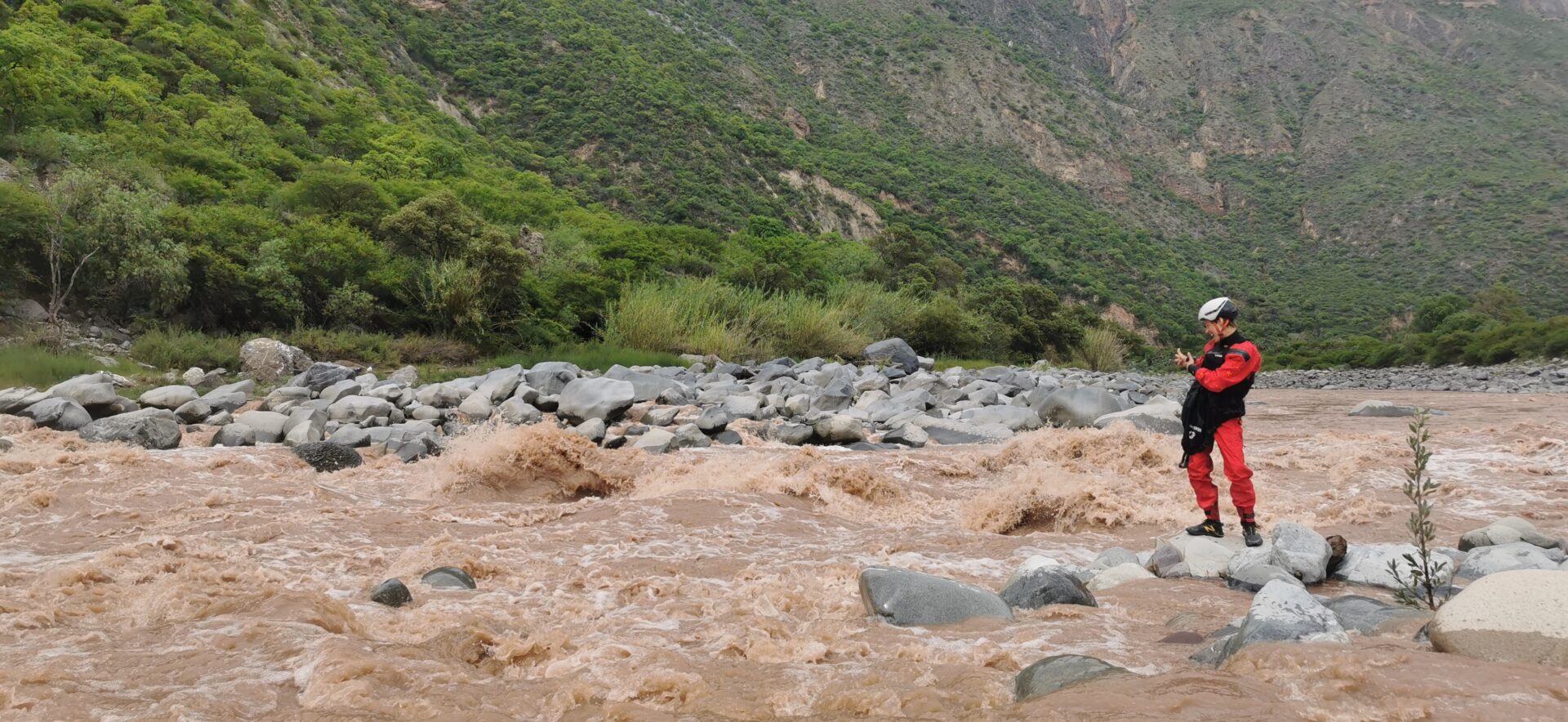
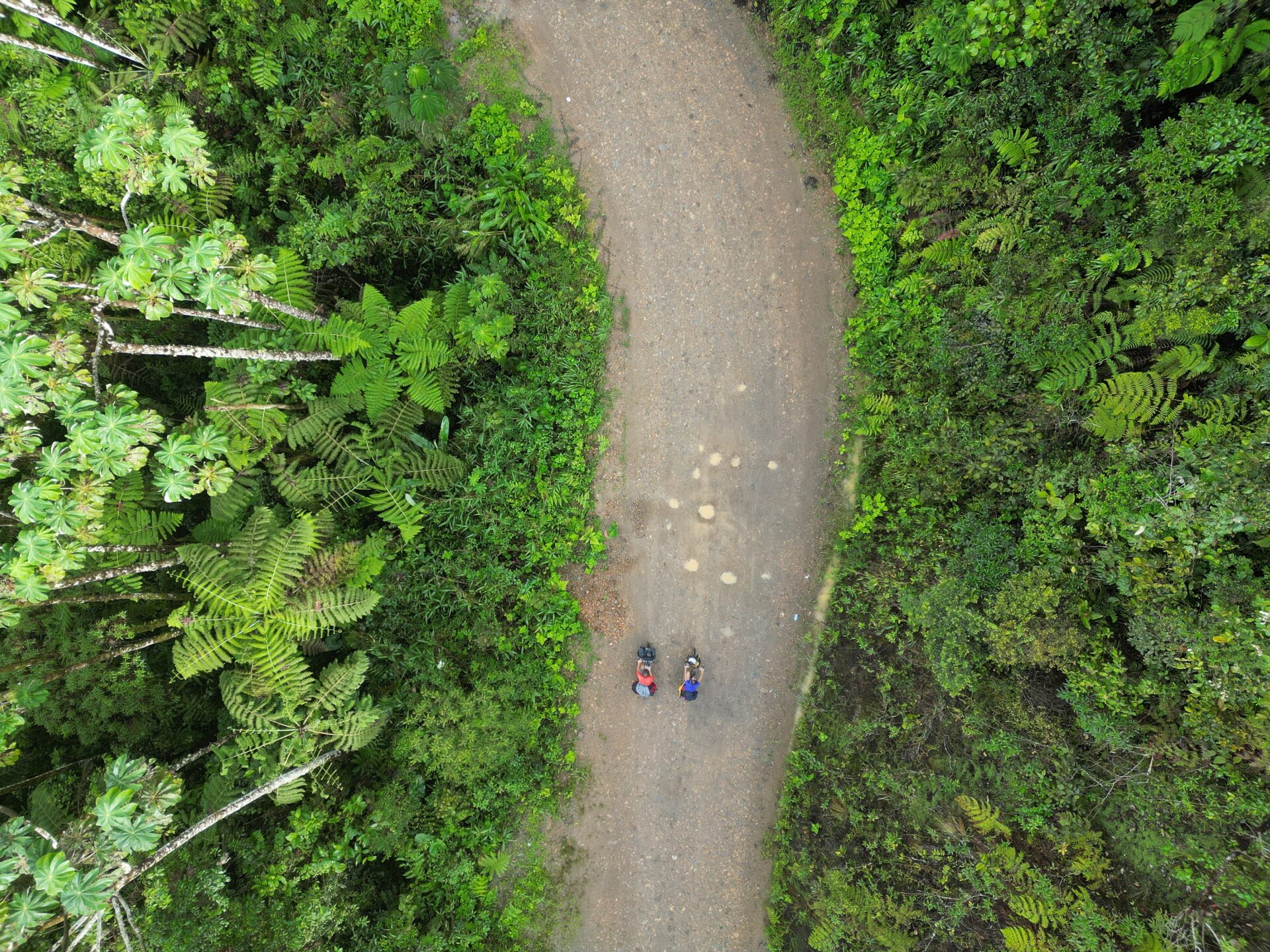
It is already hot when we reach the banks of the Río Cangaime. We are about to paddle 200 kilometres down this river completely self-sufficient, before reaching a track at the Peruvian border and cycling back up the Río Santiago gorge. I spent hours poring over satellite images before finding this bikerafting route through the Ecuadorian jungle. The adventure promises to be epic!
THE LONGEST DAY
Day 9, Río Cangaime, Ecuador
On the riverbank, men are loading equipment onto a boat. They look at us with surprise but say nothing. With the packraft loaded to the brim, we finally push off. Signs of human civilisation gradually disappear. The vegetation is lush, the sky a brilliant blue, and we let ourselves drift along on the gentle current. The feeling is exhilarating!
After two hours on the water, we stop for lunch on a shady rock. A few minutes later, two dugout canoes appear, each carrying three men, rifles slung over their shoulders. They pass us, turn around and come back towards us.
– Señores, estimados, ¿qué están haciendo aquí?
– ¿A dónde van?
– ¿Tienen una autorización?
The questions come thick and fast, polite but insistent. The message soon becomes clear: we are not welcome here. They explain bluntly that they are going to escort us back to the village we came from and expel us from the area. The leader tells us: “You’re lucky we’re civilised. Other communities would have cut your heads off.” Nice!
We are in no position to negotiate, so we comply. We paddle back up some side channels, cross the river on foot several times and carry our bikes through the forest. It is 38°C in the shade, with humidity like a steam bath, and the straps of our minimalist backpacks are cutting into our shoulders.
After three exhausting hours of walking, we reach the community of Tashapa, home to members of the Shuar people. The village leader makes us sit on a bench in the middle of the communal hut and calls the villagers over the loudspeaker. A few minutes later, two hundred pairs of eyes are staring at us, their faces stern and their expressions dark. The people’s court is now in session.
Everyone takes their turn lecturing us for nearly an hour. One particularly angry man accuses us of being drug traffickers or gold prospectors. We apologise and explain that we are tourists and were unaware of Ecuadorian regulations. We are told to unpack our belongings so they can inspect them. The atmosphere relaxes when the assembly realises that the only things we have to hide are dirty underwear and socks.
A few minutes pass before the village leader delivers the verdict: we owe them three hundred dollars in compensation for the trouble we have caused. In exchange, a man gives us a wooden phallus sculpture. The whole situation feels surreal!
We think our ordeal is finally over… Not quite! About ten people follow us to the village of Cangaimine, which we reach by pushing our bikes back up the awful climb we had descended that morning. Another crowd, more sermons, more apologies. Night falls, the hours crawl by and the waiting drags on.
Eventually, two police officers arrive. They are friendly and say they are there to sort things out. We cycle the 25 kilometres to Macuma, escorted by the headlights of their motorbike, spend the night in a police cell and wait to find out what fate has in store for us the next day.
Thanks to Nathalie, an Ecuadorian woman who has heard about our misadventure and intervenes with the authorities, we are eventually allowed to leave. We take a bus out of the region, keen to leave this strange episode behind us as quickly as possible.
A FRESH START
Day 37, Cordillera Blanca, Peru
As we prepare to leave Huaraz, several emotions are mixed together: the excitement of getting back on the road, a hint of sadness at leaving the cocoon of El Tambo hostel, and a touch of apprehension about what lies ahead.
Shortly after our Ecuadorian misadventure, I fell ill. Fever, stomach pains and extreme fatigue stayed with me for fifteen days, eventually leading to a stay in hospital in Trujillo. Will our run of bad luck finally come to an end?
After one last breakfast with our friends Maïwenn and Émile, whom we met ten days earlier, we leave Huaraz behind and head south once again.
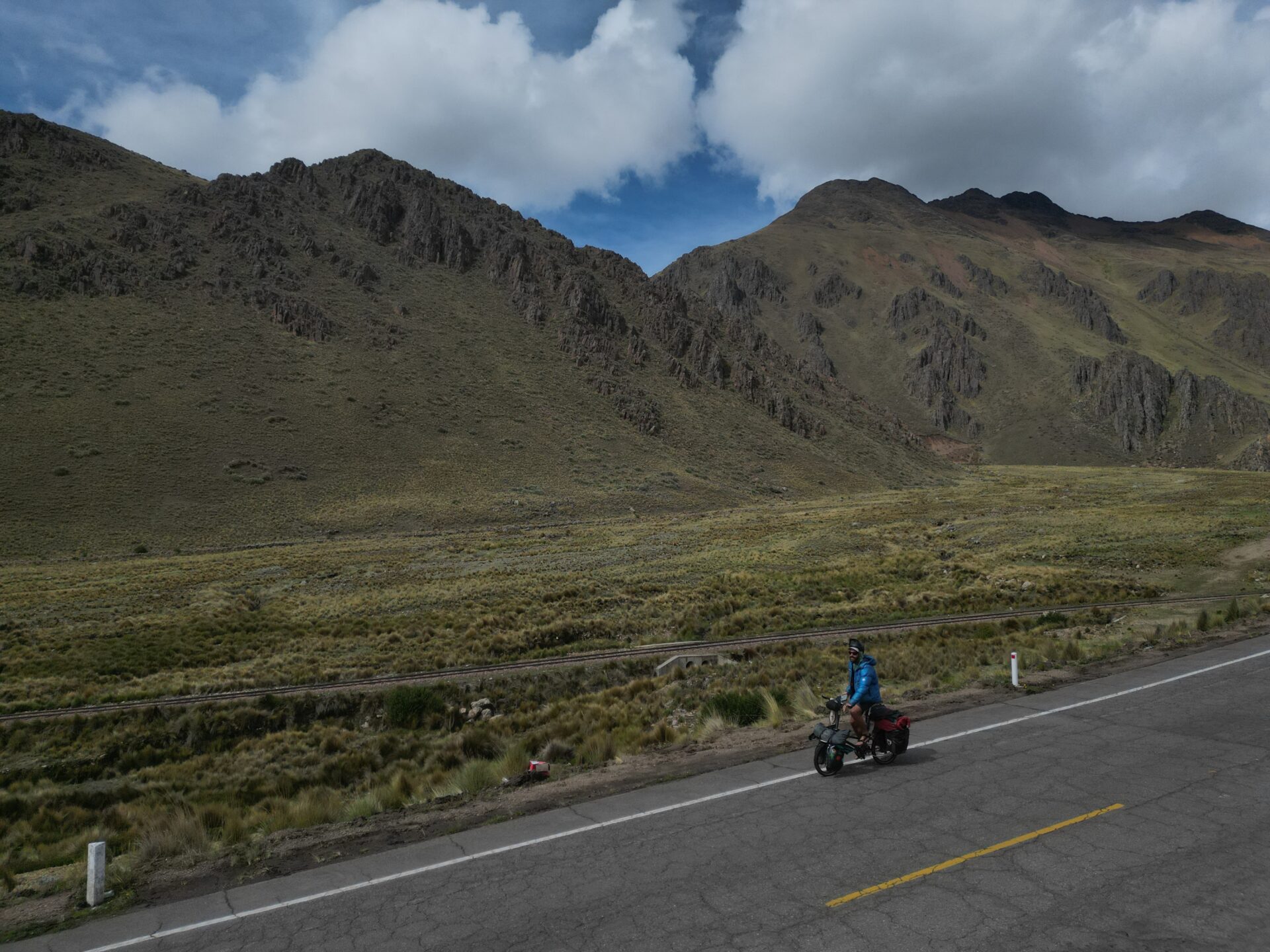
The climb towards Nevado Pastoruri is spectacular. Puya raimondii, the only plants capable of withstanding the harsh climate at this altitude and which flower only once in their lifetime, stand like sentinels of time, remnants of an ancient world.
Shortly before the pass, sleet begins to fall. Further on, the road clinging to the mountainside offers sublime views over the valleys below and the mountains stretching towards the horizon.
The difficulty is proportional to the beauty of the landscape. The cold freezes our fingers and toes, the rocky track, a genuine roller coaster, is tricky to negotiate, and the 4,800-metre altitude makes itself felt in our legs and lungs.
But the effort is worth it! Faced with so much beauty, our eyes fill with tears. What a joy to leave the hardships behind and feel the journey finally gaining momentum again after such a chaotic first month!
THE ENCOUNTER
Day 55, Río Pampas, Peru
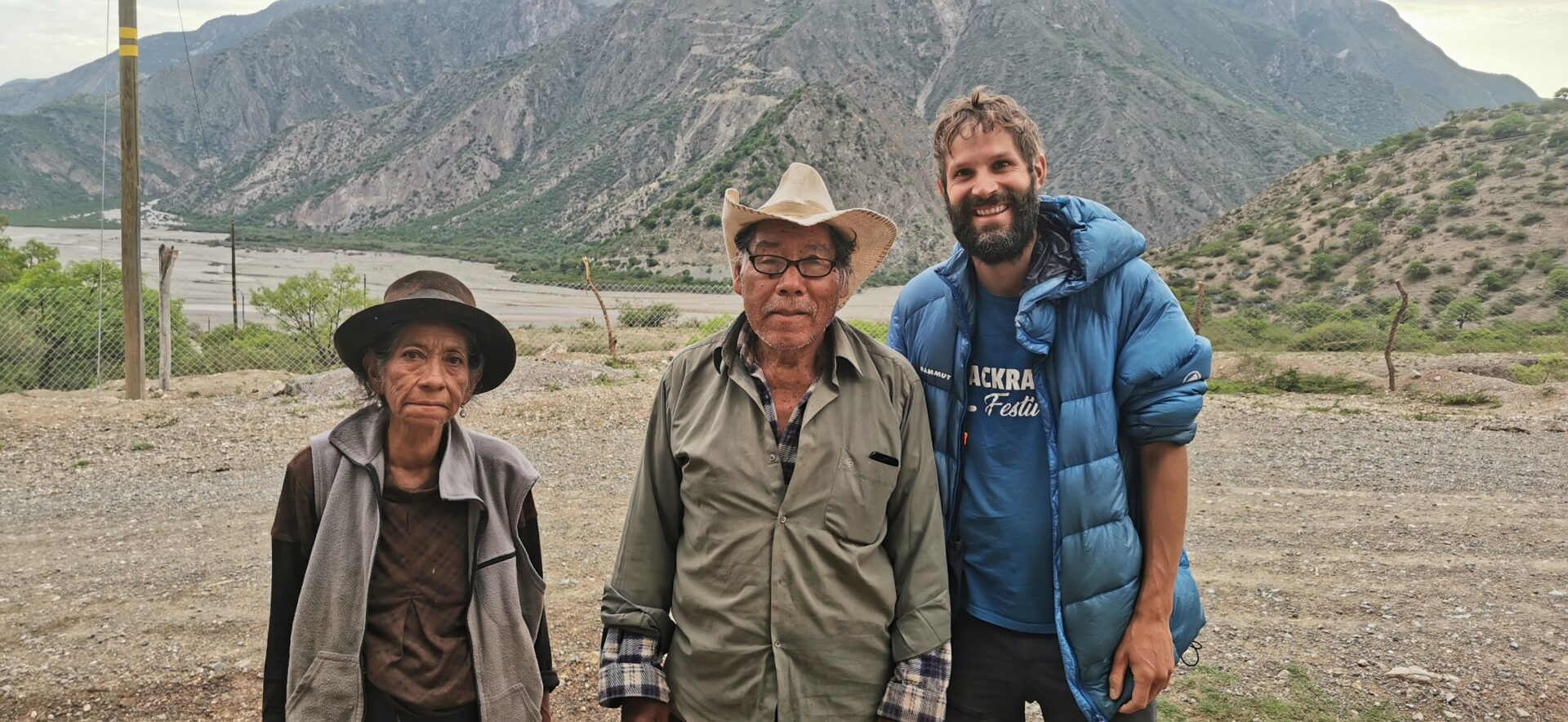
As thunder rumbles over the mountain opposite and torrential rain approaches, we knock on the door of a house a short distance from the river. A small elderly woman appears, her gaunt face lit up by a broad smile. She invites us inside, where she lives with her sister, brother-in-law and nephew. The smell of simmering soup fills the room, accompanied by a steaming hot drink. Between sips, we answer a barrage of curious and friendly questions. Mauro, Felicitas, Maxima and Hector eventually offer us a bed, which we gladly accept!
We feel at home here and offer to spend the day helping Mauro and Felicitas in the fields. They are delighted to have us stay, but have a hard time accepting our help. At 75, their days are fairly quiet anyway. They are not planning to sow their fields until the beginning of the following week, so we are not going to disrupt their plans. Instead, we talk about their way of life, our journey and Peru. We have never met people so interested in sharing their everyday lives and so curious about ours.
They live almost entirely self-sufficiently. They built their adobe house themselves, raise goats, pigs, chickens, cows and guinea pigs, make their own cheese, fish in the Río Pampas and grow almost every fruit and vegetable imaginable for their own consumption — from ginger and coffee to potatoes, maize, peanuts, avocados, mangoes and lemons…
Necessity rather than choice is what drives this way of life: the nearest village is several hours away on foot and they have very little money. Everyday life is not easy, but they seem happy, even though the health problems that come with age are likely to make the coming years more difficult. We leave the following morning, full of gratitude, promising to keep in touch.
CHRISTMAS IN OUR UNDERWEAR… THEN IN FULL RAINGEAR
Day 76, Lake Titicaca, Bolivia
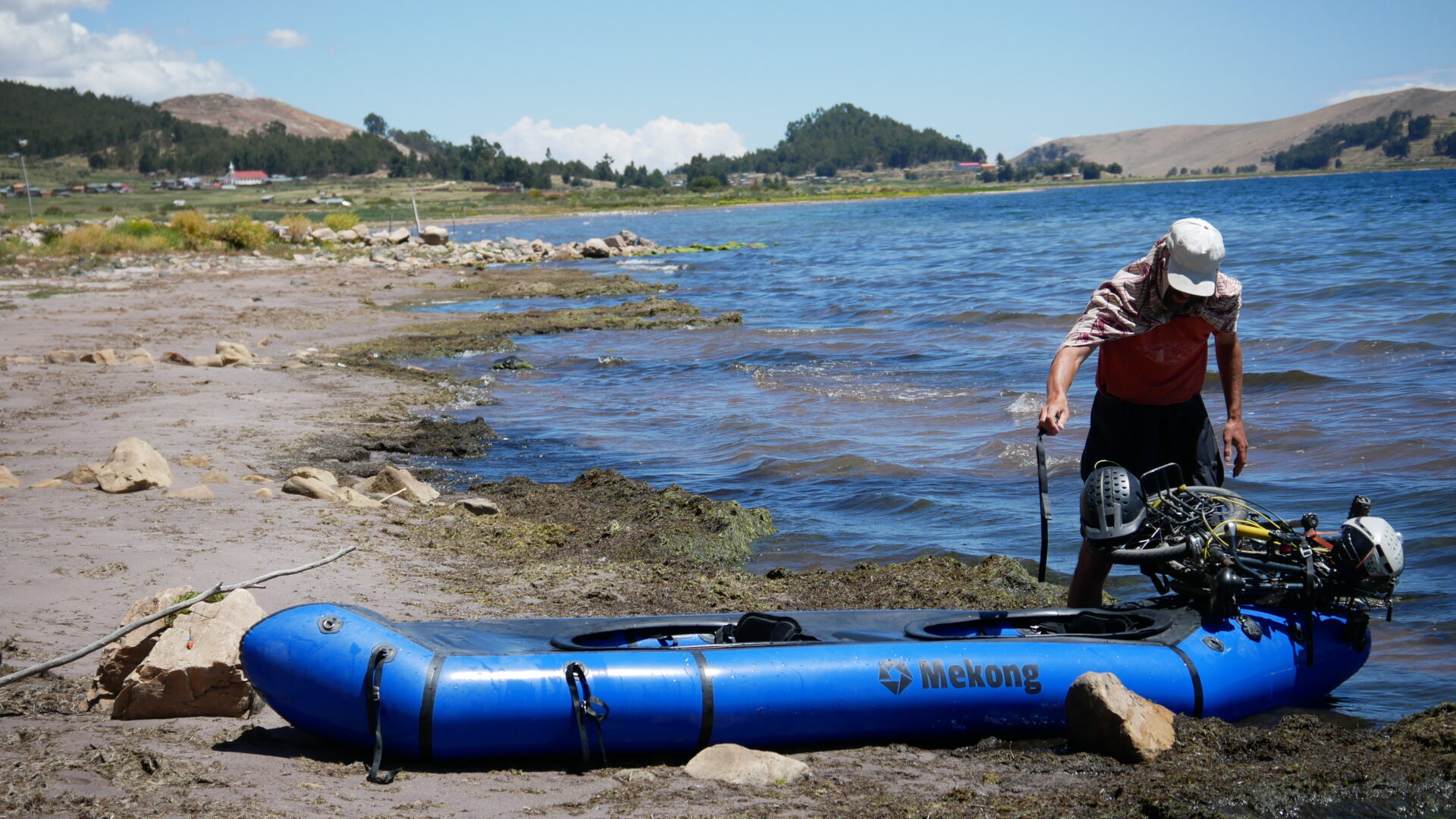
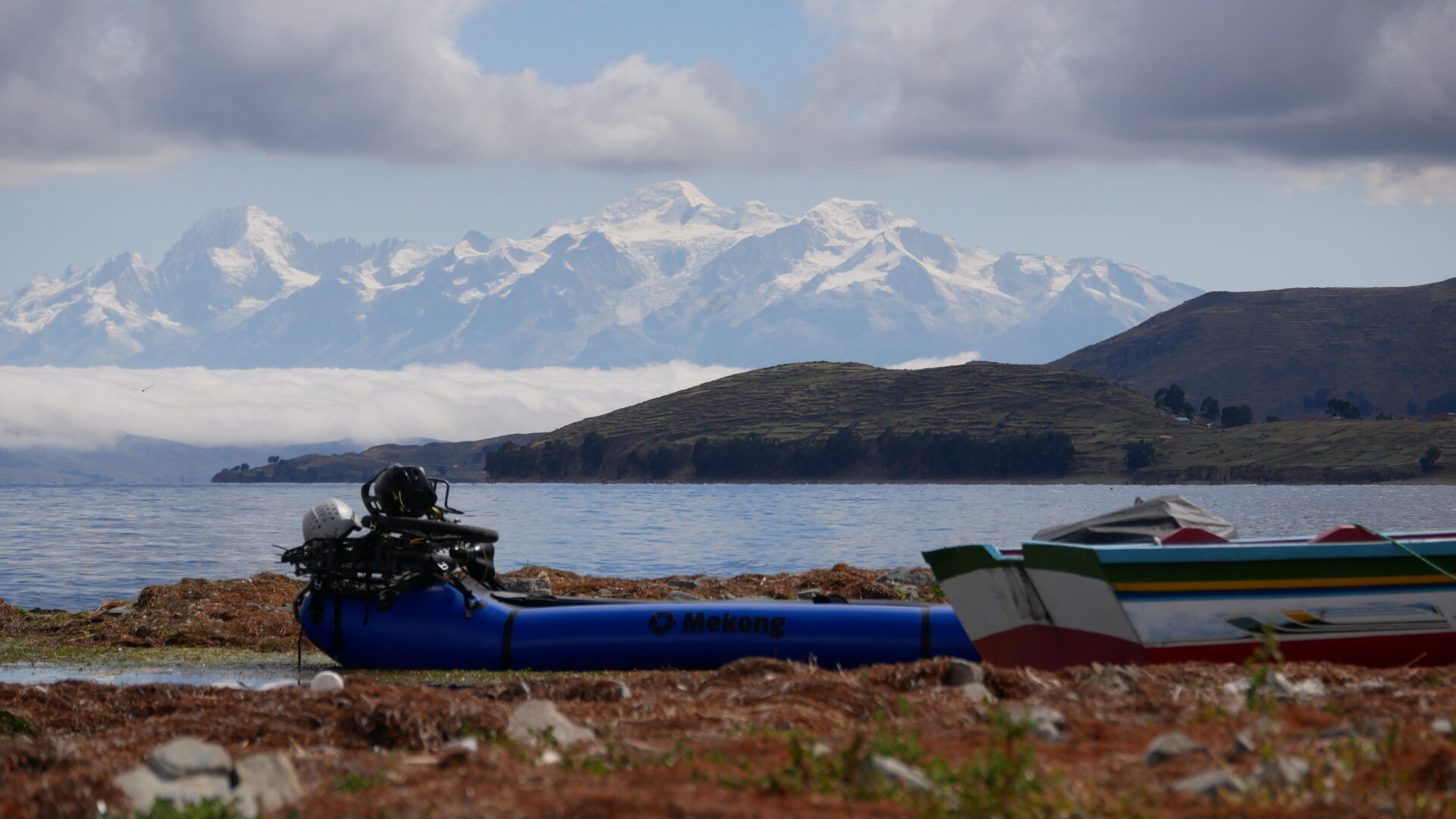
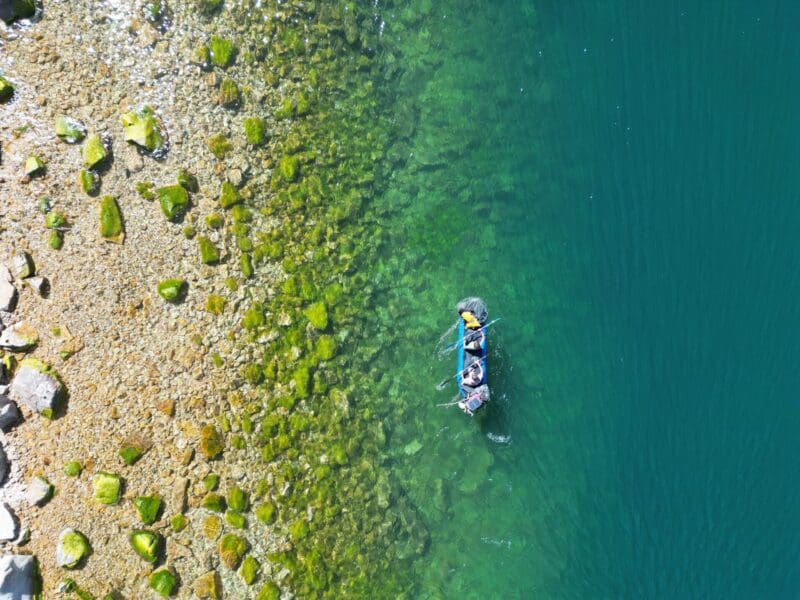
At the end of December, we cross Lake Titicaca by packraft, planning to reach the village of Copacabana in time to spend New Year’s Eve there. The sun is intense. It feels more like we are on the Mediterranean coast in spring than at 3,800 metres above sea level on Christmas Eve!
We cover a good distance without pushing too hard before stopping on a beautiful pebble beach. We try our luck fishing with a makeshift rod, then climb the hill overlooking the lake to watch the sunset. We prepare a proper Christmas dinner: potatoes cooked over a wood fire, mango chutney, tuna stir-fried with vegetables, a ti-punch and, of course, a piece of panetón!
Four days later, the mood has changed considerably. A light crosswind slows us down, I am struggling with a stiff neck and rain joins the party. We take shelter under a small chapel and, probably a little worn out, end up arguing over something trivial. Spending twenty-four hours a day together isn’t always easy!
Eventually the storm moves away and peace is restored. The landscape is magnificent: the azure waters of this vast high-altitude lake, centuries-old terraces built by the Incas, and in the distance the snow-capped peaks of Nevado Illampu and Ancohuma.
Yet after a week of paddling, punctuated by an intense day of cycling to cross the Bolivian border, a slight weariness begins to set in. We reach Isla de la Luna after a crossing of around 15 kilometres, keeping our fingers crossed that the black clouds on the horizon will not come any closer. Tomorrow, we’ll be in Copacabana for some well-deserved rest!
RÍO GRANDE
Day 116, Río Grande, Argentina
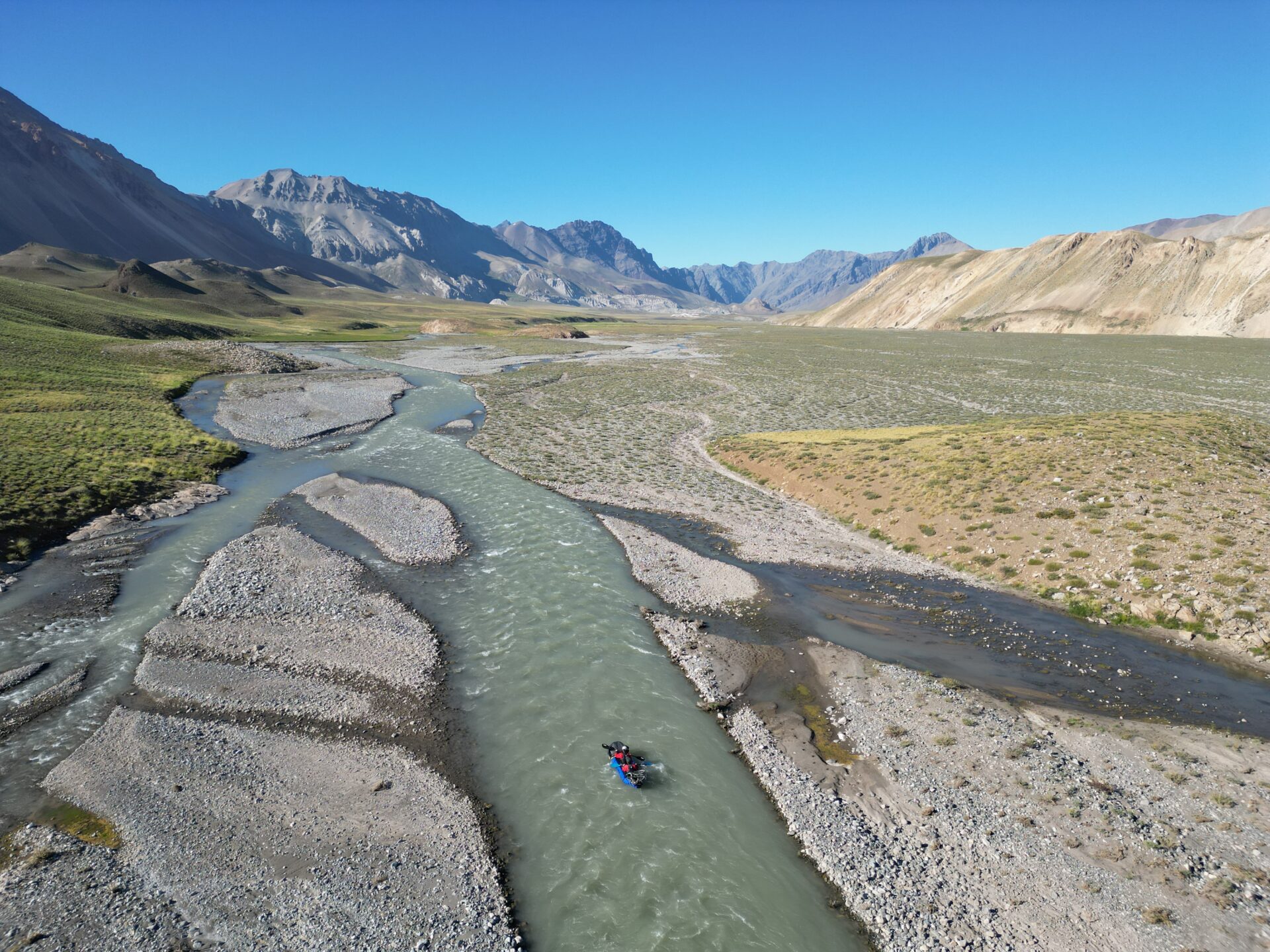
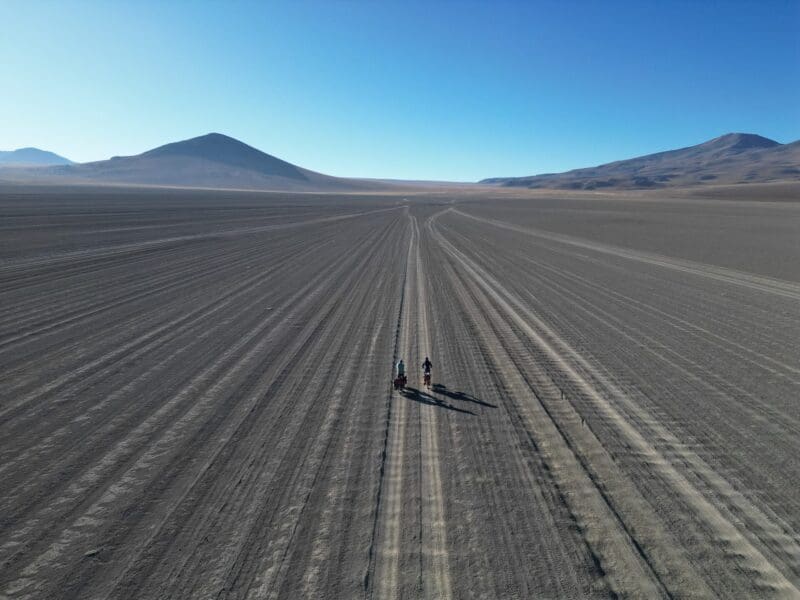
After paddling the Río Grande from its source, 200 kilometres upstream, through spectacular landscapes, we switch back to cycling. We congratulate ourselves on the decision: the paved road offers beautiful views over the river and we make good progress.
The smooth tarmac soon turns into an exhausting track, however. The temperature rises, the wind changes direction and the tabanos – horseflies – make their appearance. Despite pedalling frantically, they still manage to bite us at 20 km/h. We later learn that they are among the fastest flying insects, capable of reaching speeds of 100 km/h… We never stood a chance!
We resort to improvised clothing for protection: Capu lends me her old leggings, I drape a towel over my shoulders and pull socks over my forearms. Not exactly a fashion statement, but the bites become less frequent.
In the middle of the afternoon, we reach a tienda, where the owner asks us the usual questions. During the conversation, he tells us that earlier that morning he helped a group of ten gringos carrying their equipment around an impassable section of the Río Grande.
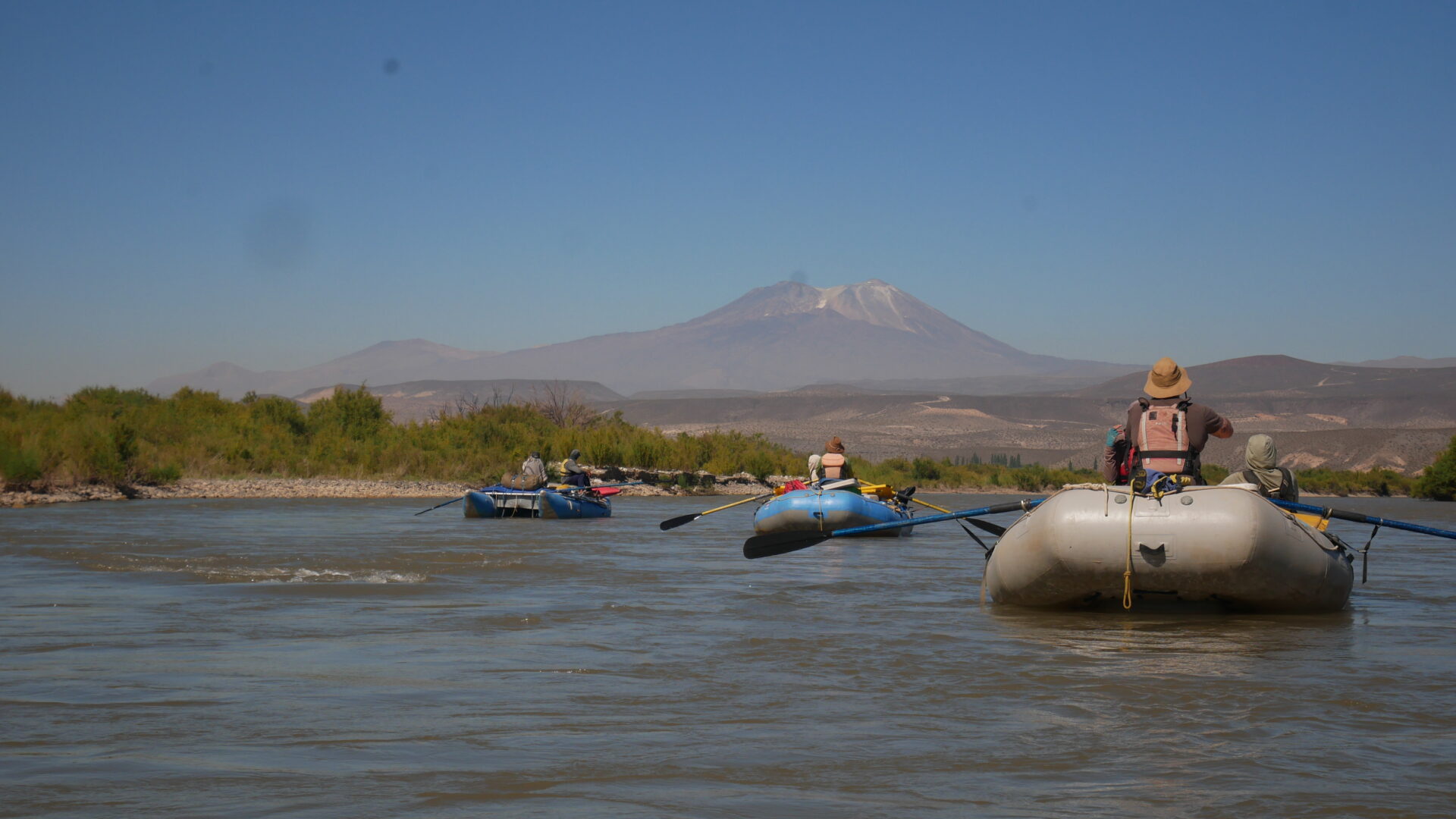
What?! There are other kayakers just ahead of us, even though this river is supposedly only paddled a few times a year? After asking around, we discover that they are members of an expedition organised by Sierra Ríos, an American non-profit whose website was one of our few sources of information about rivers in South America.
The next day, after two hours on the water, four rafts appear around a bend, moored along the riverbank. We wave to a white-haired man. Eyes wide, he calls the rest of the team, who are talking a little further away.
They are at least as surprised to see us emerge in the heart of this canyon as we were the previous day when we discovered that we were not alone on the river. When we explain that we are crossing the continent with our mini bikes and a packraft I built myself – I am the founder of Mekong Packraft -they are blown away!
We spend three days with them, delighted by this unexpected and thoroughly enjoyable encounter, the shared camaraderie and the added comfort that comes with it. Their rafts carry four 100-litre coolers packed with beer, meat and fresh vegetables, and even everything needed to bake a chocolate cake for Capucine’s birthday. Quite a change from the ketchup, carrot and plastic-flavoured cheese wraps we’ve been eating for three weeks!
SCHRÖDINGER’S CAPUCINE
Day 122, Neuquén Province, Argentina
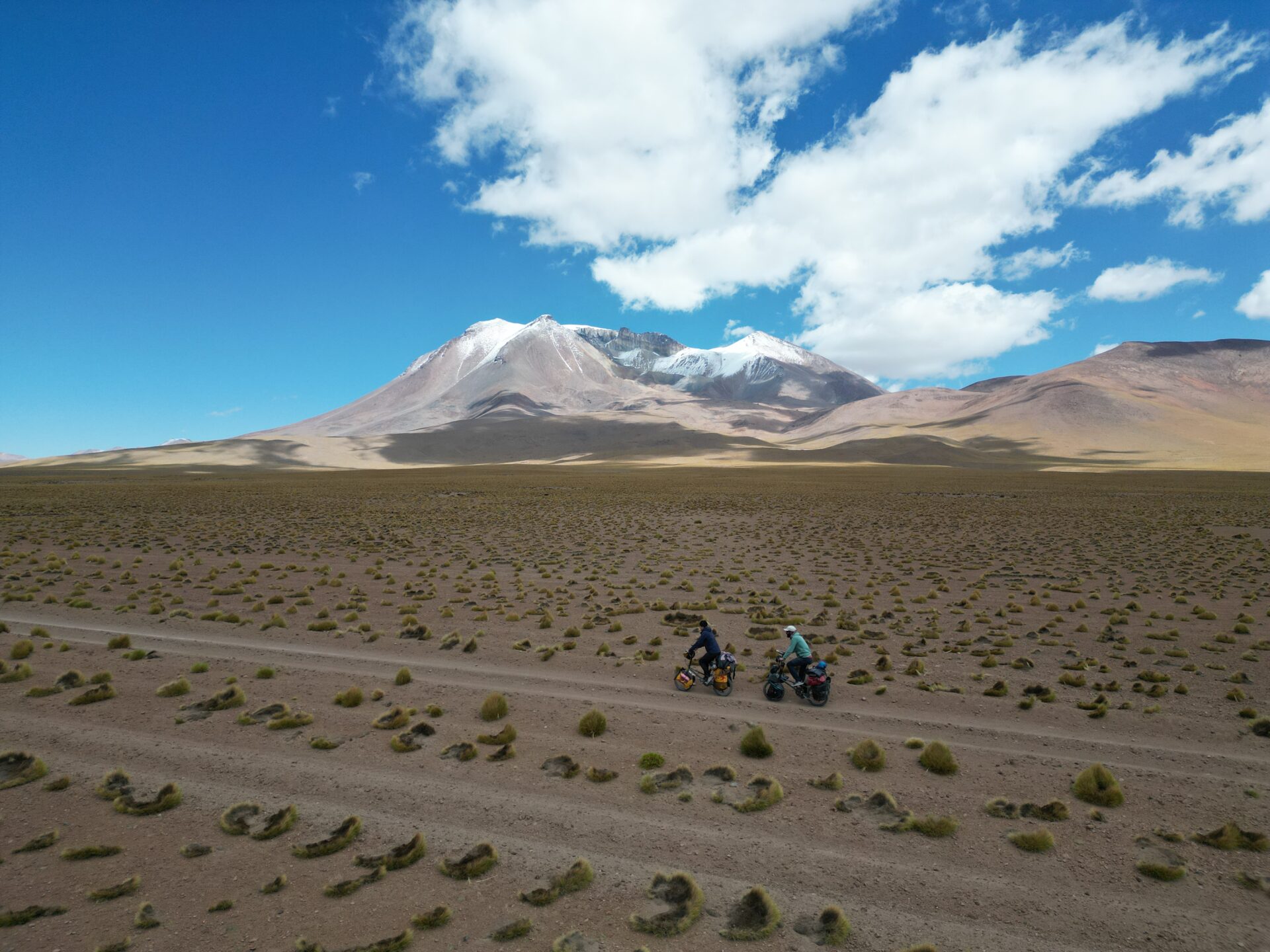
We rack up the kilometres along Ruta 40, which crosses the vast, sometimes monotonous deserts of western Argentina. It is the first climb of the day when I pass a white pickup truck travelling at nearly 100 km/h.
Five seconds later: tyres screaming on the asphalt, followed by the deafening crash of crumpling metal. I turn around. A huge cloud of dust. The pickup, which has missed the bend and presumably rolled several times, is out of sight.
Capucine! When I looked back five minutes earlier, she was about a hundred metres behind me — exactly the distance between me and the crash site. I run. My thoughts are racing.
In the best-case scenario, she was a few dozen metres away when the vehicle hit the guardrail. In the worst, she was directly in its path. What are the odds? One chance in five of being in the wrong place at the wrong time? Pickup versus cyclist — she would have no chance. I reach the bend. Still no sign of her. I refuse to believe it. Capucine…
Suddenly, a small head emerges from the slowly dissipating cloud of dust. She raises her arm to signal that everything is fine. The relief is immense. She catches up with me and explains: the vehicle missed the bend, went up onto the guardrail and somehow managed to land back on the road twenty metres in front of her. It all happened so quickly that she didn’t even have time to be frightened. Phew! We hug each other, trying to recover from the shock, then continue down the road, cursing those bloody pickups.
SUCH A PERFECT DAY
Day 176, Carretera Austral, Chile
Capucine wakes to the fluttering wings of a hummingbird. The bird flies from flower to flower, drinking precious nectar. Our little corner of paradise – a weathered wooden cabin surrounded by ferns and fuchsias, overlooking a jetty above Mitchell Fjord – is wrapped in a thick blanket of mist.
We read in the warmth of our sleeping bags, then sit on the jetty with our feet dangling above the water and eat our now-traditional breakfast of powdered milk, chocolate and oats. An otter appears from behind a rock, slips behind us and continues on its way. The mist slowly clears and the first rays of sunshine come to tickle our faces.
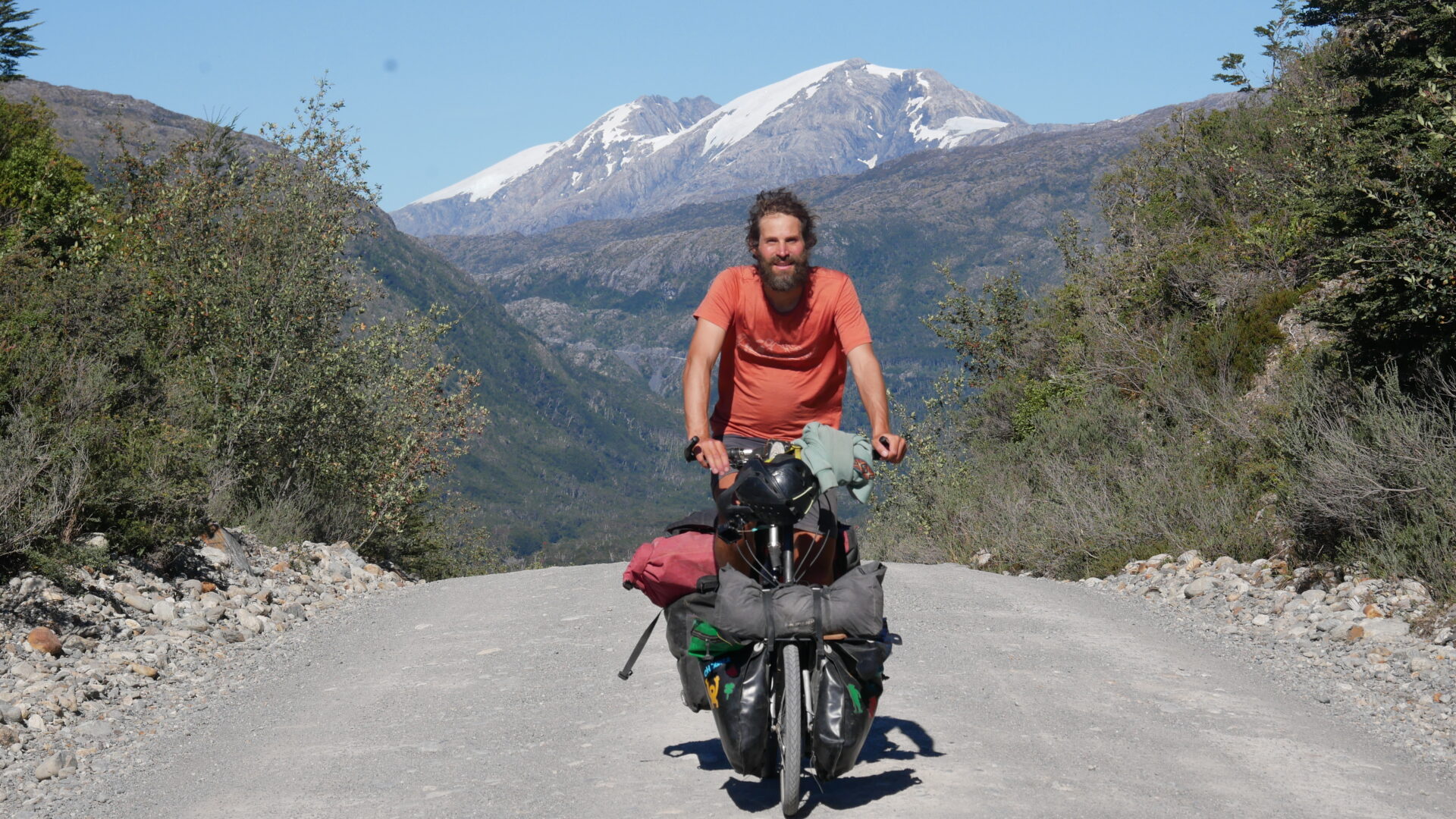
The road climbs, steep gradients making our calves burn. All around us, the highest peaks are capped in pristine white. Silver waterfalls cascade from their icy summits. Below, the Río Bravo has carved a magnificent gorge. Its milky waters carry sediments torn from the mountains by the glaciers that gave birth to it.
A few minutes later, after catching up with Capucine at the top of the climb, a condor glides overhead. It comes closer, slowly extends its legs and lands in a tree overlooking the road, just a few metres away. A second one follows, even closer. We can see the movement of its wings and hear the deep whoosh of the air they displace. Incredible!
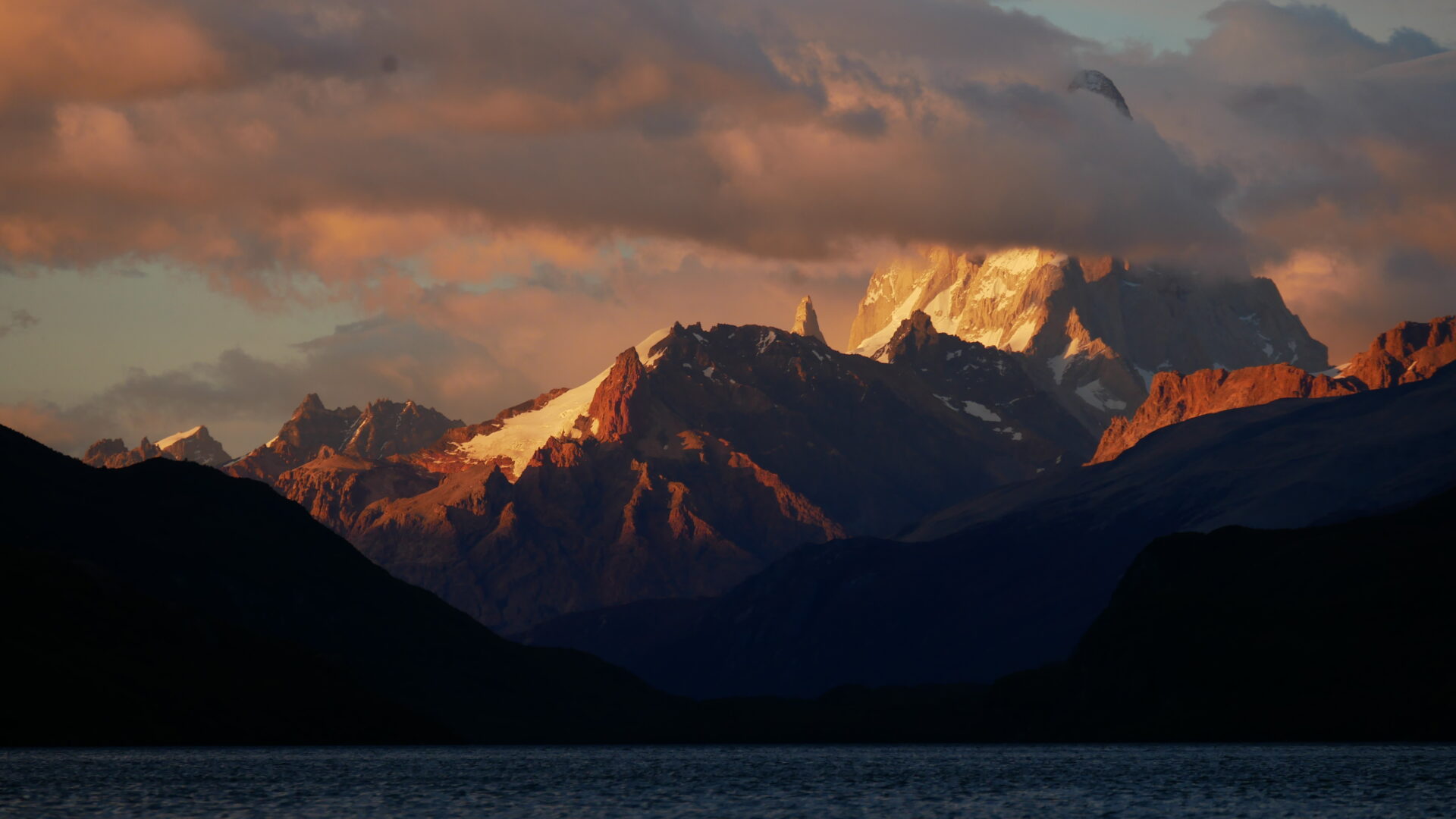
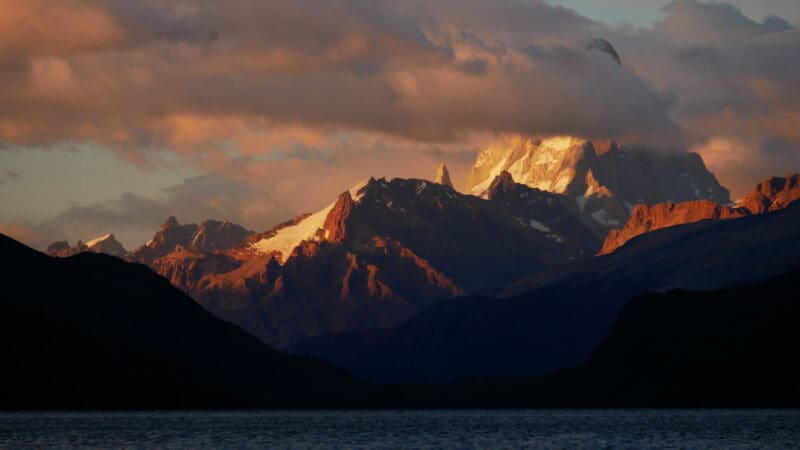
In a beautiful pool of crystal-clear water, its walls covered in moss, we wash away the sweat and dust accumulated throughout the day. In the distance, the last rays of sunlight colour the snow-capped mountains marking the Argentine border. We can feel it: our journey is coming to an end.
In a few days, we’ll be in El Chaltén, the final destination of this journey. We set up camp beside a lake, and only the countless mosquitoes inhabiting the area disturb the peace of this beautiful evening. We put up only the mosquito net. Tonight, we’ll fall asleep with smiles on our faces and our heads beneath the stars.
WHAT A JOURNEY!
How difficult it is to sum up six months of travelling ! Adventure takes us through every possible emotion, sometimes all in the same day.
Wonder at landscapes of extraordinary beauty, introspection – boredom, even – when the days begin to blur into one another, immense joy. Fear too, an incredible sense of freedom, fatigue – and even suffering – when the terrain and the elements turn against us… The intensity of these emotions is often multiplied. This account does not tell the whole story of our journey. It is a selection, a collection of moments and emotions that left their mark on us.
Travelling as a couple is not always easy, but sharing such intense experiences creates a powerful bond. From that complicity, and from the love that grew between us with every turn of the pedals and every stroke of the paddle, a little one was born a few months ago.
A new adventure has begun: parenthood! But we are not drawing a line under everything else, far from it! We are already planning to take our little one along and share these moments as a family of three.