The Bike in Your Trunk
A simple idea that expands how you travel
Bicycles, Cars, and Everyday Life
Transportation rarely fits neatly into one category. Distances, work schedules, family responsibilities, and geography mean that most people rely on automobiles for at least part of their travel.
Bicycles remain one of the most efficient, enjoyable, and flexible ways to cover short distances. The challenge isn’t choosing one mode over the other, it’s finding practical ways to combine them.
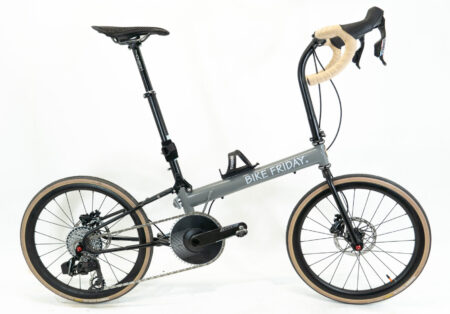
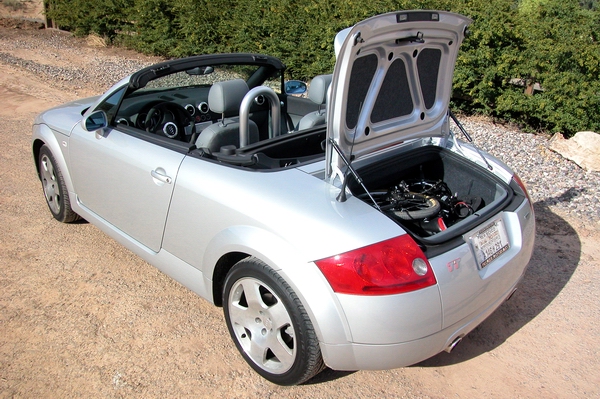
A folding bike stored in the trunk changes what your car can do. Because it folds compactly, it takes up little room but is always ready: the last mile of a commute, a lunch ride on a sunny day, a way to reach your destination when traffic grinds to a halt. It’s a deceptively simple idea, and a practical one. Once you start doing it, you’ll find more opportunities to ride than you expected.
Last-Mile Commuting
One of the most useful situations for a trunk bike is the last mile.
Parking right at your destination isn’t always convenient or affordable. Downtown areas, campuses, waterfronts, and events can make close parking difficult, expensive, or simply unavailable. With a folding bike, you park where it’s easy, outside the congested zone, at a park-and-ride, away from expensive garages, and ride the final stretch. It’s often faster than circling for a close spot, and considerably less stressful.
Ride Where It’s Better
Many people live near roads that are too busy or fast to ride comfortably. The quiet backroads, protected paths, and trail networks worth riding are often somewhere else entirely.
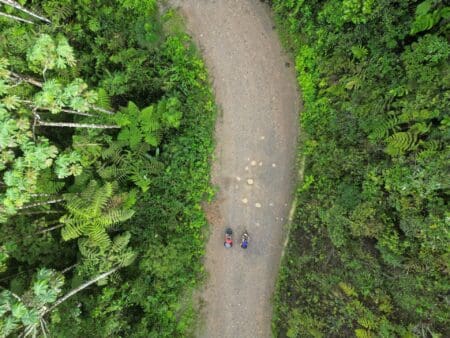
A folding bike lets you drive to a better starting point. Park once, unfold, and begin your ride where the conditions are actually good. Instead of fighting traffic for the first few miles, you start where cycling makes sense.
A Better Alternative to Bike Racks
Bike racks have their place, but they come with real trade-offs worth considering before you buy one.
External racks, roof or hitch, add aerodynamic drag and weight, which hurts fuel efficiency on longer drives. Quality racks aren’t cheap either, running $200 to $600 before installation. Roof racks in particular have destroyed more than a few bikes when a driver forgets the bike is up there and pulls into a garage or drive-through. Every load and unload requires a lift, and for heavier e-bikes that’s not just inconvenient, for many riders it’s physically not possible. A bike on an external rack is also visible, accessible, and an obvious target for theft in a way that a bike locked inside your car isn’t.
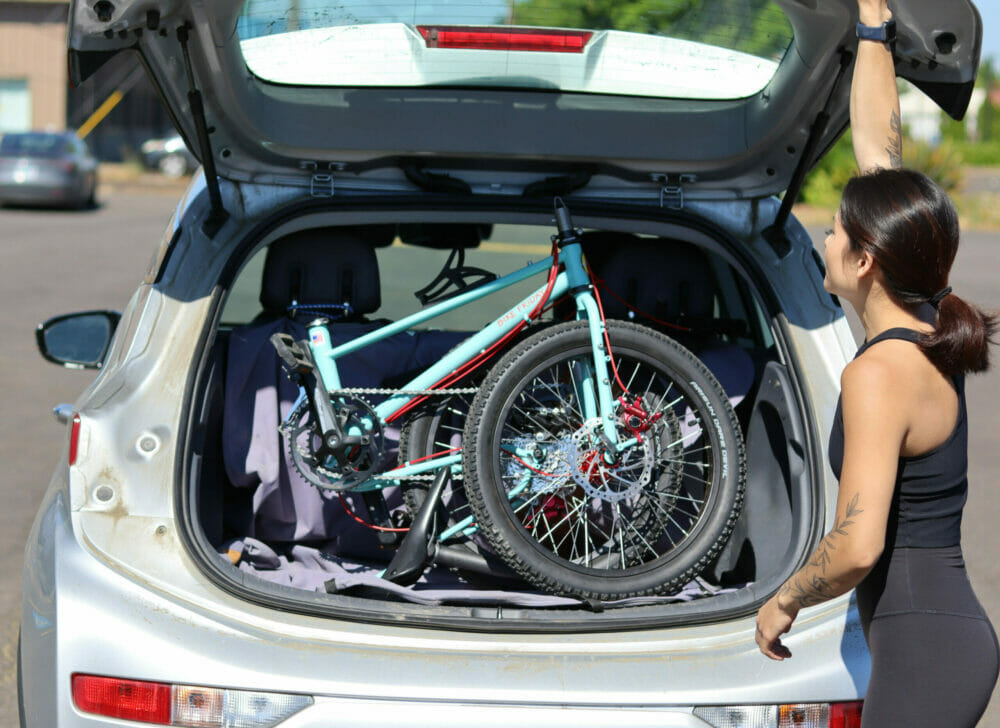
Carrying a folding bike inside the car avoids all of it. No drag, no lifting overhead, no straps or mounts, and no exposure when you’re parked. A compact folding bike also means you don’t need a large vehicle to transport a high-performance bicycle, which brings lower fuel costs and easier parking along with it.
The Math Works in Your Favor
A folding bike pays back steadily over time for anyone commuting in or near a city.
Downtown parking in most American cities runs $20 to $40 a day, and monthly garage rates in urban cores regularly top $300 to $500. With a folding bike, you park at the edge, a surface lot, a free street spot, a park-and-ride, and ride in. Skip the expensive garage three days a week and the savings are noticeable within a month.
Tolls are worth thinking about too. Many commuters route through toll roads, bridges, and tunnels out of habit more than necessity. A folding bike opens up other options: park on the free side of a toll bridge and ride across, or combine transit and cycling to skip the toll entirely. In cities with congestion pricing zones, a folder gives you an exit that a car alone doesn’t.
Every mile covered by bike is a mile not put on the engine. Last-mile commuting, lunchtime errands, short trips that don’t warrant starting the car, less fuel, less wear, less maintenance over time. The upfront cost of a quality folding bike is real, but for regular commuters the ongoing savings in parking alone tend to close that gap faster than people expect.
Travel, Rentals, and Getting Around on Trips
A folding bike changes how you travel, not just how you commute.
It fits in the trunk of a rental car, including compact models that wouldn’t fit a standard bike in any configuration. When you reach your destination you can explore the town, the waterfront, or the trail network without moving the car again.
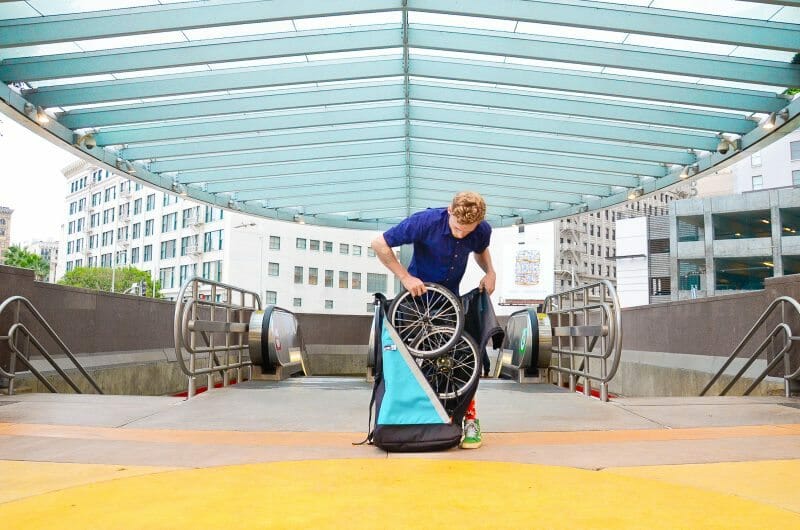
The bigger travel advantage is what a folder does on public transit. A full-size bicycle can’t board most trains, it has to travel as checked luggage, if it’s accepted at all. A folding bike in a bag goes with you on virtually every train, every time, with no special arrangements and no extra fees. On Chicago’s L during rush hour, a standard bike isn’t allowed on board. A folding bike in a bag is. For anyone putting together a commute across multiple modes, train, bike, and walking, a folder is what makes the whole thing viable.
Trips open up in other ways too. You can explore cities by bike without a car, ride between accommodations and attractions, and cover legs of a journey that would otherwise mean a taxi or a long wait.
When Plans Change
A folding bike in the trunk means small logistical obstacles, a service stop, an unexpected errand, a trailhead you want to check out, become short rides rather than long waits or unnecessary drives. It’s useful precisely because you can’t always predict when you’ll need it.
That extends to the everyday emergencies too. A flat tire, a dead tank, a breakdown miles from the nearest town, situations that normally mean waiting on the side of the road. With a bike in the trunk, you ride to the gas station or the nearest place with a signal instead of sitting still.
And in larger emergencies, when wildfires or floods turn highways into parking lots and people are leaving their vehicles on foot, a folding bike isn’t a convenience. It’s a way out.
Always There When You Need It
Most of the time, a folding bike in the trunk sits waiting, taking up a corner and not much else.
When you do need it, for a commute, a trip, a transit connection, or just a good afternoon, it’s ready in seconds. No rack to fit, no roof to load, no planning required.
Why Bike Friday
Fit, freedom, performance and long term quality.
Our design goals have always been focused on insuring we build a bike that will truly fit Your particular body measurements, gearing, component style and riding plans. We know you will ride more when the bike fits your properly. The bike fold and pack-ability offers freedom to take it with you for more situations, including other kinds of transportation.
We’ve also been focused on building a bike with high performance capabilities, ready to cross mountain ranges and continents just as well as rides across town. We build to last, to support your rite to repair and upgrade your bike components over time.
Keeping one in your trunk isn’t just practical. It’s a way of saying yes more often. Yes to the ride you didn’t plan for, the afternoon that opened up, the road you’ve always wanted to try. The bike is there. All you have to do is unfold it.
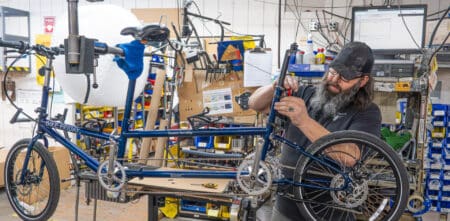
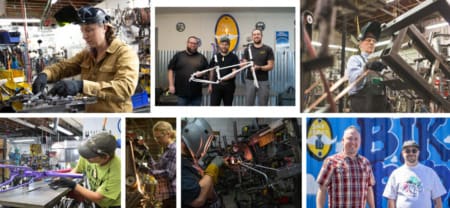
Bike Friday has been building folding bikes in Eugene, Oregon since 1992, and the mission has never changed: Passionately build high quality, versatile bicycles, personalized to empower people, with freedom and convenience, to ride anywhere on a bike that fits them.
If you are looking for a bike that will give you all this and more just contact our friendly bike consultants, Peter and Walter. You can either email them at Sales@bikefriday.com or call them:
PeterB@bikefriday.com (Direct Phone Mon-Fri 8-5pm PST 541-234-5127)
WalterL@bikefriday.com (Direct Phone Mon-Fri 9:30 – 5:30pm PST 541-234-5126)